
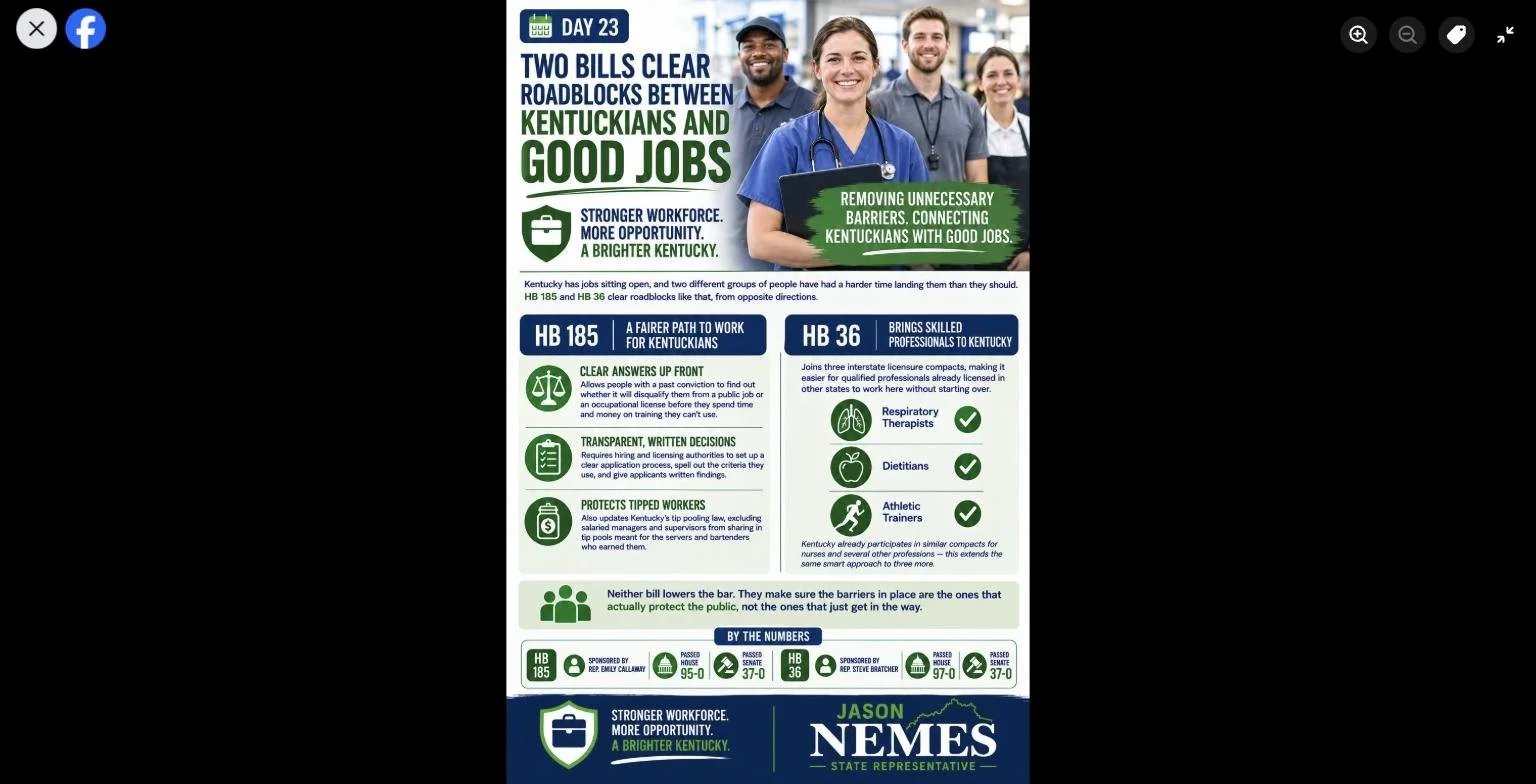
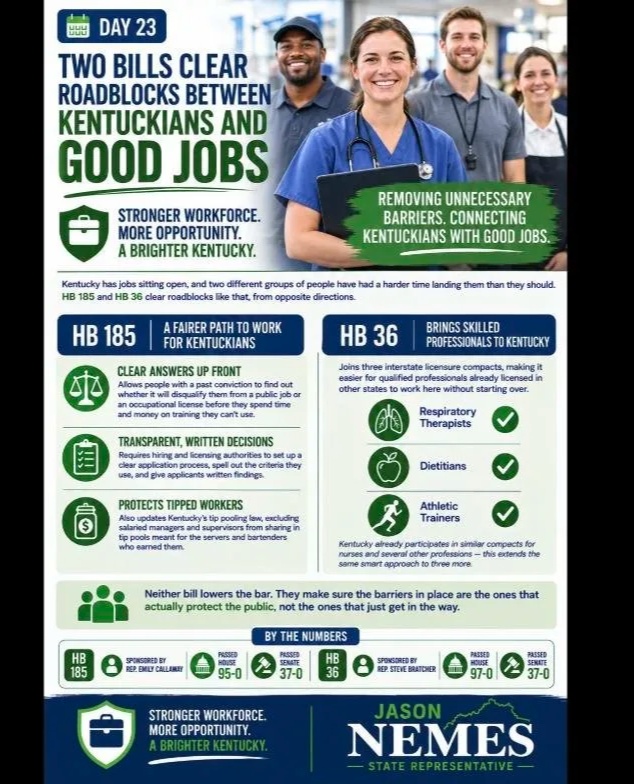
Kentucky has jobs sitting open, and two different groups of people have had a harder time landing them than they should: someone with an old conviction trying to get back to work, and a licensed respiratory therapist, dietitian, or athletic trainer who just moved here from another state. HB 185 and HB 36 clear roadblocks like that, from opposite directions.
HB 185 gives people with a past conviction a way to find out up front whether that conviction will actually disqualify them from a public job or an occupational license, before they spend time and money pursuing training they can’t use. Hiring and licensing authorities will have to set up a clear application process, spell out the criteria they use to decide whether a conviction is actually related to the job in question, and give applicants written findings so they know where they stand. The bill also updates, in a provision added by the Senate, Kentucky’s tip pooling law, excluding salaried managers and supervisors from sharing in tip pools meant for the servers and bartenders who earned them.
HB 36 goes after a different kind of barrier. It brings Kentucky into three interstate licensure compacts, for respiratory therapists, dietitians, and athletic trainers, that let professionals already licensed in another compact state work here without starting the licensing process over from scratch. Kentucky already participates in similar compacts for nurses and several other professions, and this extends the same approach to three more.
Neither bill lowers the bar for who can work in these fields. They make sure the barriers in place are the ones that actually protect the public, not the ones that just get in the way.
HB 185 was sponsored by Rep. Emily Callaway and HB 36 was sponsored by Rep. Steve Bratcher.