
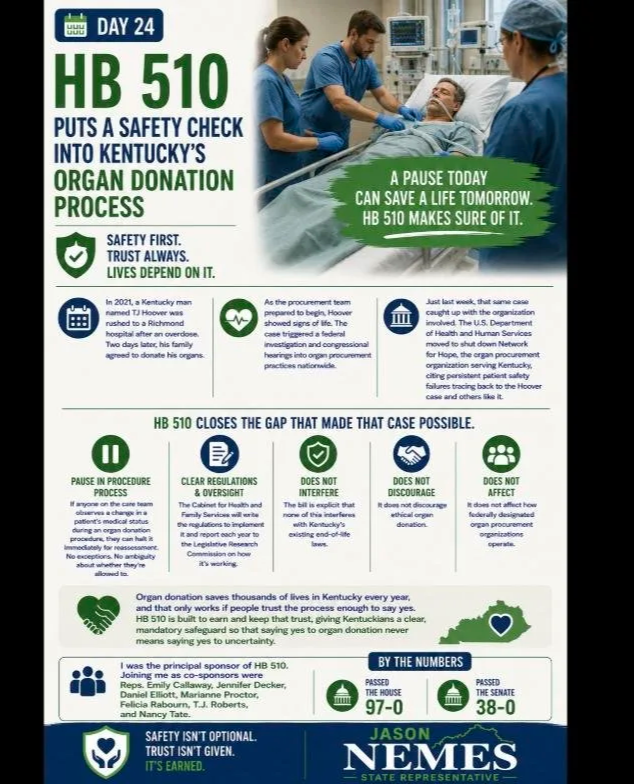
In 2021, a Kentucky man named TJ Hoover was rushed to a Richmond hospital after an overdose. Two days later, his family agreed to donate his organs. As the procurement team prepared to begin, Hoover showed signs of life. The case triggered a federal investigation and congressional hearings into organ procurement practices nationwide, and it exposed a gap in Kentucky law: no standardized process existed for pausing a procedure when something like that happens.
Just last week, that same case caught up with the organization involved. The U.S. Department of Health and Human Services moved to shut down Network for Hope, the organ procurement organization serving Kentucky, citing persistent patient safety failures tracing back to the Hoover case and others like it.
HB 510 closes the gap that made that case possible in the first place. It establishes a formal “pause in procedure” process, so that if anyone on the care team observes a change in a patient’s medical status during an organ donation procedure, they can halt it immediately for reassessment, no exceptions, no ambiguity about whether they’re allowed to. The Cabinet for Health and Family Services will write the regulations to implement it and report each year to the Legislative Research Commission on how it’s working.
The bill is explicit that none of this interferes with Kentucky’s existing end-of-life laws, discourages ethical organ donation, or affects how federally designated organ procurement organizations operate.
Organ donation saves thousands of lives in Kentucky every year, and that only works if people trust the process enough to say yes. HB 510 is built to earn and keep that trust, giving Kentuckians a clear, mandatory safeguard so that saying yes to organ donation never means saying yes to uncertainty.
I was the principal sponsor of HB 510. Joining me as co-sponsors were Reps. Emily Callaway, Jennifer Decker, Daniel Elliott, Marianne Proctor, Felicia Rabourn, T.J. Roberts, and Nancy Tate. It passed the House 97-0 and the Senate 38-0.