Medicaid Reform: House Bill 2 and Kentucky’s Medicaid Program
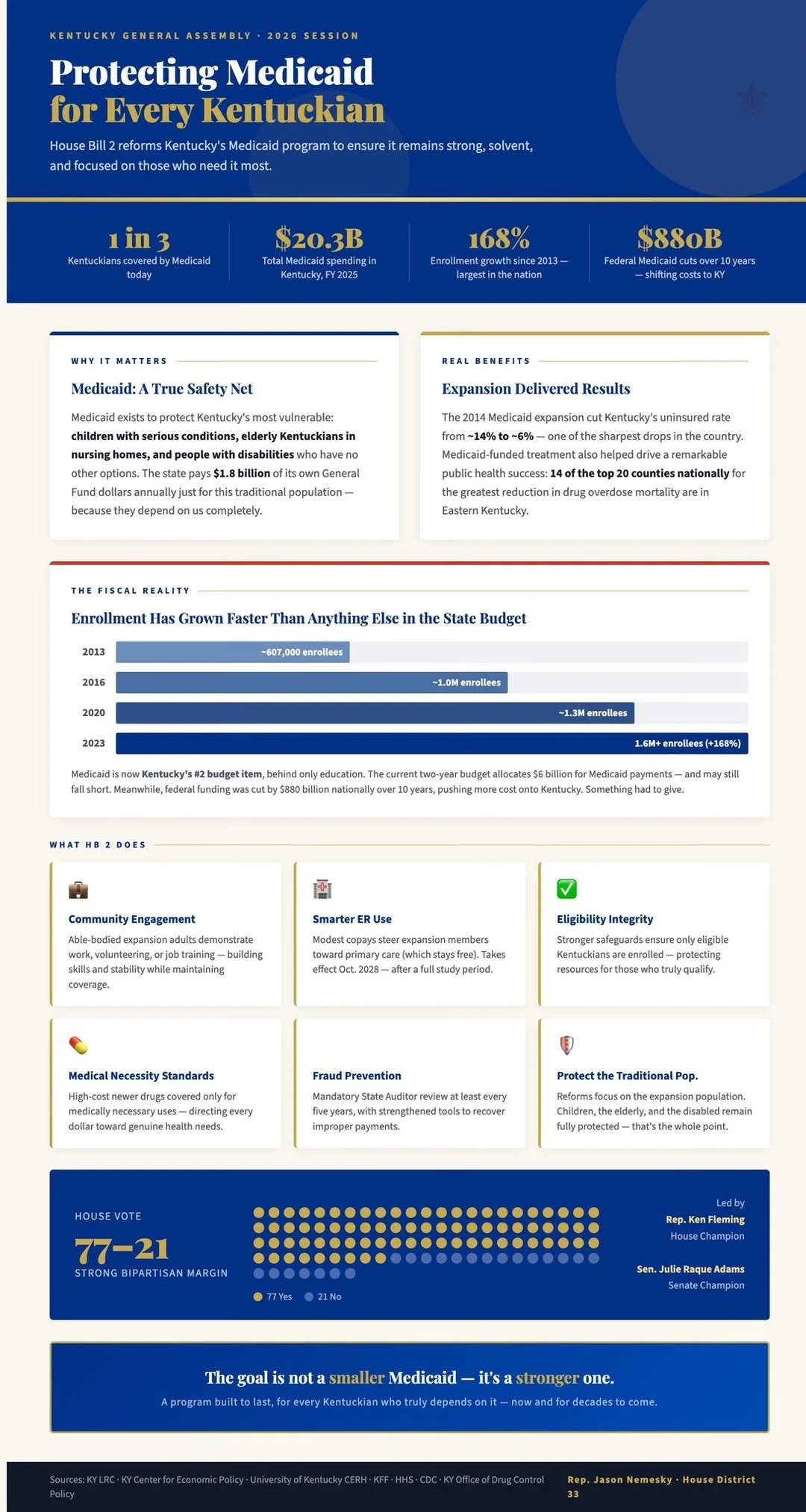
Medicaid is one of the most important programs in our state. It provides health coverage for Kentucky's most vulnerable residents: children with serious medical conditions, elderly Kentuckians in nursing homes, and people with disabilities who simply have no other options. For those Kentuckians, Medicaid isn't a government benefit. It's a lifeline. And protecting it—not just today, but for the long haul—is exactly why the Kentucky General Assembly passed House Bill 2.
First, How We Got Here:
In 2014, Kentucky expanded Medicaid under the Affordable Care Act, opening the program to a new group: low-income adults who didn't previously qualify. That decision produced real benefits. Kentucky's uninsured rate dropped from about 14% to around 6%, which was one of the sharpest declines in the country. It also expanded access to addiction treatment in a state that desperately needed it. And it has worked. A landmark University of Kentucky study found that 14 of the top 20 counties in the nation for the greatest reduction in drug overdose mortality were right here in Eastern Kentucky, and Medicaid-funded treatment was a meaningful part of that story. These are real results that helped so many of our people, and they're worth acknowledging honestly.
But as important as those benefits are, the growth in Medicaid has created a fiscal reality we can no longer ignore.
The Numbers Tell the Story:
Kentucky is one of the poorest states in the nation, which means Medicaid matters here more than in most places. It also means the financial pressure is more acute. Consider these facts:
* Medicaid now covers roughly 1 in 3 Kentuckians — about 1.4 million people as of today.
* Total Medicaid spending in Kentucky reached $20.3 billion in fiscal year 2025 alone — combining federal and state dollars.
* The state's General Fund contribution to traditional Medicaid (covering the elderly, disabled, and children) was $1.8 billion just last year.
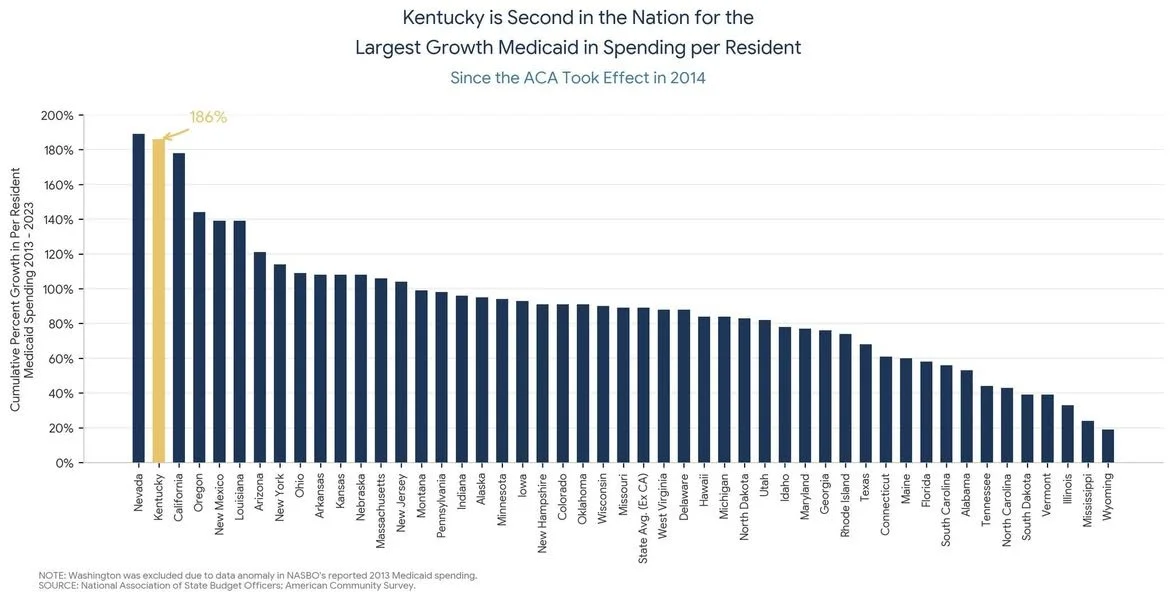
* Kentucky's Medicaid enrollment grew by 168% between 2013 and 2023 — the largest increase of any state in the nation.
Medicaid is now the second-largest item in Kentucky's entire state budget, behind only education.
* And last year, Congress cut $880 billion in federal Medicaid funding over the next decade, shifting a larger share of the cost directly to Kentucky.
Even with all of that, the current two-year state budget appropriates $6 billion for Medicaid. There is no more room to simply absorb growth and hope for the best.
What HB 2 Does — and What It Doesn't Do:
House Bill 2, led in the House by Rep. Ken Fleming and moving through the Senate under the leadership of Sen. Julie Raque Adams, is designed to make Medicaid sustainable without pulling the rug out from under the people who need it most.
Here's what it actually does:
1. Community engagement requirements. Able-bodied adults in the expansion program will need to demonstrate that they are working, volunteering, attending school, or otherwise engaged in their communities. This is a reasonable expectation — and one that also helps those individuals build skills and stability.
2. Smarter use of the ER. HB 2 introduces modest copays for expansion members who use the emergency room, while keeping primary care visits completely free. The goal isn't to restrict access to care — it's to steer people toward primary care, where they'll build a relationship with a doctor and get better long-term outcomes. This provision doesn't even take effect until October 2028, and the legislature has built in a study period to assess its impact before it does.
3. Eligibility integrity. The bill strengthens safeguards to make sure the people on the Medicaid rolls are actually eligible to be there. That's just good stewardship of public funds.
4. Medical necessity standards. Coverage for certain newer, high-cost drugs will be limited to medically necessary uses. Every dollar spent wisely on this end is a dollar available for a child's surgery or an elderly Kentuckian's nursing home care.
5. Fraud prevention and accountability. The bill requires the State Auditor to audit the Medicaid program at least once every five years and strengthens the state's ability to recover improper payments.
The Bottom Line:
Some have raised concerns that reforms like this will harm vulnerable Kentuckians. It's a fair thing to watch closely, and the legislature will. But the alternative — doing nothing while costs spiral and the program strains under its own weight — puts the traditional population most at risk. When a program becomes financially unsustainable, it's the elderly, the disabled, and the children who have the most to lose.
HB 2 passed the Kentucky House 77-21, a lopsided margin that reflects a shared understanding that the program we have today cannot be the program of tomorrow without meaningful reform.
The goal is not a smaller Medicaid, but a stronger one. The goal is a program that is still there, in full force, for every Kentuckian who truly depends on it, now and for decades to come.
That's what we voted for. That's what Kentucky deserves.