
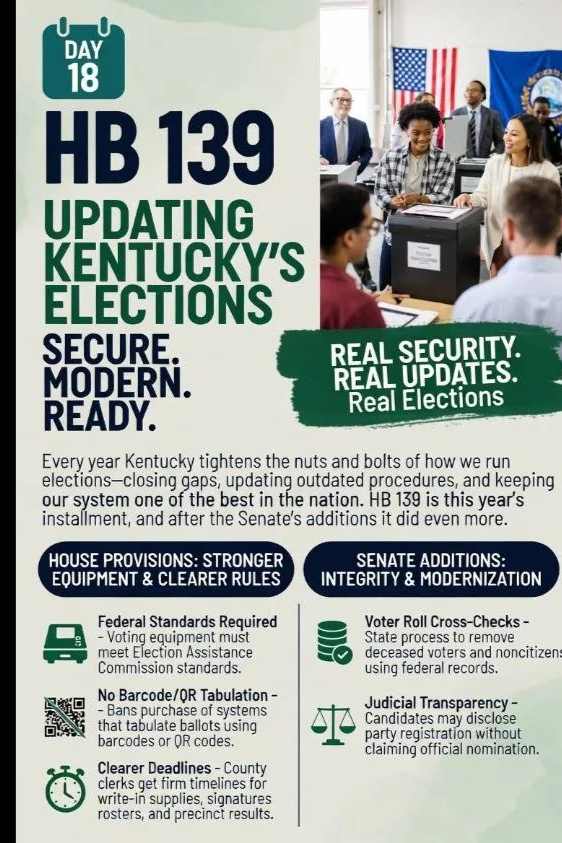
Every year, Reps. Jennifer Decker, DJ Johnson, and John Hodgson lead a bipartisan push to tighten up the nuts and bolts of how Kentucky runs its elections, closing gaps that turned up in the last cycle and updating outdated procedures before they cause a problem at the ballot box. HB 139 is this year’s installment, and after the Senate added provisions of its own, it ended up doing more than usual.
As introduced, the bill requires voting equipment to meet federal Election Assistance Commission standards, bans the purchase of voting systems that tabulate ballots using barcodes or QR codes, gives county clerks a clearer deadline to stock write-in ballot supplies, and tightens the timeline for delivering signature rosters and precinct results after an election. The Senate then added its own election integrity measures: a process for the state to cross-check voter rolls against federal records to remove deceased voters and noncitizens, an update bringing our laws into compliance with what courts have required in allowing judicial candidates to disclose their party registration, an increase in the campaign finance reporting threshold from $100 to $200, and connecting the amount one may contribute to a state candidate to the federal level, the first adjustment in years.
The House passed the bill 92-1. After the Senate’s changes, the Governor vetoed it, and the General Assembly overrode the veto, 80-20 in the House and 32-6 in the Senate.
Elections work best when both the rules and the equipment keep pace with the technology and the calendar. HB 139 is Frankfort doing that routine maintenance.